

Elliott Erwitt

People who accept the evidence of their senses can be divided into three non-professional categories: saints, simpletons, and humorists. The mass of mankind is insulated from these several species of misfortune by virtue of the fact that they know better than to trust plain experience.
For example, innumerable visitors to the museum in which Elliott Erwitt's picture was made saw precisely what he saw --- or would have seen it if their catalogue had not told them that they were seeing interesting early- and middle-period works by X, Y, Z, and two anonymous masters. Faced with a contradiction between what he sees and what he reads, the average person will ignore what he sees.

No mechanism has ever been devised that has recorded visual fact so clearly as photography. The consistent flaw in the system has been that it has recorded the wrong facts: not what we knew was there but what has appeared to be there.
This Achilles' heel of the medium has long been recognized by theorists, and has been identified as "superficial photographic accuracy," or "surface naturalism."

The only way in which this criticism might in theory be met with reference to Erwitt's photograph would be to claim that the picture demonstrates some general philosophic truth; e.g.; it shows that the true function of museums is not to exhibit pictures, but to house treasures.

Those who may like the photograph and dislike the explanation are free to regard the picture as a vision, perfect nonsense, or a joke --- with the understanding that they are thus clearly identifying with one of the three groups named above.
from "Looking at Photographs" by John Szarkowski

 Personal Best
In this definitive collection, the master shares those works he considers his personal best. As you browse this carefully curated retrospective, you'll feel nostalgia, wonder --- and a lasting sense of life's rich potential.
 Personal Exposures
Seeing what few others see, and capturing it for all of us, is the essence of Personal Exposures. For this volume Elliott painstakingly culled the work of a lifetime, rediscovering prints he had not seen in years and creating a unified whole that reflects a consistent, mature vision of photography and humanity. The pictures reflect a lifetime of humorous, ironic observation and sensitivity to the human condition. 248 duotone photographs.
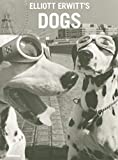
 Elliott Erwitt's Dogs
One of the 20th century's most celebrated image-makers, this collection, in a generously oversized format, focuses on Elliott Erwitt's distinctive photographs of dogs. In a heartfelt and original tribute to man's best friend, this photographic master captures all the diversity of the canine kingdom.
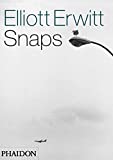
 Elliot Erwitt Snaps
Containing over 500 pictures, over half of which have never been published before, Elliott Erwitt Snaps is a unique and comprehensive survey of his work. The book is arranged in nine chapters, each with a one-word title: Look, Move, Play, Read, Rest, Touch, Tell, Point, Stand.
- To me, photography is an art of observation. It's about finding something interesting in an ordinary place. I've found it has little to do with the things you see and everything to do with the way you see them.

